How to Make a Weekly Plan That Fits Your Actual Commitments
A weekly plan can make recurring commitments easier to manage. See what to include, how to share responsibilities, and when to leave the page open.
A weekly plan works best when it helps you make real decisions, not when it tries to predict every hour. To make a weekly plan that fits your commitments, start with what is fixed, note what needs preparation, and leave uncertain time open.
What belongs in a weekly plan?
Begin with information that changes what you can do: shifts, appointments, school events, deadlines and arrangements with other people. Add only the preparations that would otherwise be easy to miss, such as taking a form to an appointment or checking whether an ingredient is in the cupboard.
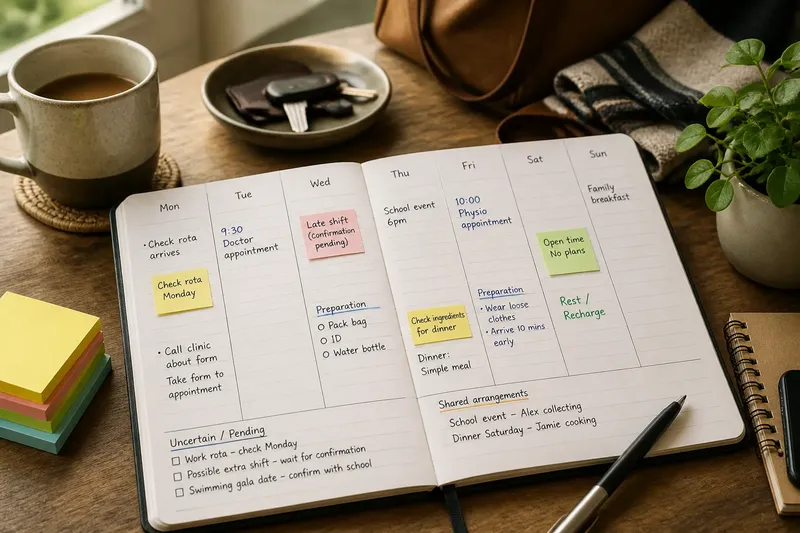
Separate what is settled from what is still uncertain. A confirmed appointment belongs on the plan; a possible shift can be marked for checking when the rota arrives. That distinction stops guesses from masquerading as commitments.
- Fixed commitments: Check the calendar for confirmed appointments, shifts and school events. If the time is confirmed, record it; if it is provisional, mark it as pending and check again before arranging other plans.
- Deadlines: Check forms, calls and errands for a stated due date. If there is a real deadline, record the next action; if there is none, keep it off the urgent list or review it later.
- Preparation: Check what an upcoming commitment requires, such as a document, packed item or ingredient. If something is missing, add a specific preparation task; if everything is ready, do not create a redundant reminder.
- Shared arrangements: Check who is collecting someone, covering a task or passing on information. If responsibility is agreed, write down the person and action; if not, ask the people involved rather than leaving a vague reminder for everyone.
- Rest and open time: Check whether every available gap has been assigned. If the plan leaves no breathing room, remove or defer a lower-priority task; if it already has open time, leave that space unclaimed.
- Uncertain items: Check which details depend on information that has not arrived. If a decision must wait, note what information is missing and when to check; if the detail is no longer relevant, cross it off.
A paper diary, a shared calendar or a note on the fridge can all hold the plan. Choose a format that the people relying on it can find and update.
How detailed should the plan be?
Plan decisions rather than every moment. A weekly view might show that Tuesday has a late shift and that dinner needs to be simple, without prescribing the exact hour for every task.
Imagine your rota arrives on Monday, while you usually write a detailed plan on Sunday. Your starting information is two confirmed appointments and an unknown work pattern. You record the appointments, note “check rota Monday”, and leave the other days open; when the rota arrives, you add only the shifts and any preparation they require. The resulting plan distinguishes settled commitments from unknown ones and avoids rewriting a week built on guesses.
If a plan repeatedly needs extensive revisions, remove detail that does not affect a decision. Keep the parts that help you act.
How can a shared plan make responsibility clearer?
A shared list can show what needs doing, but it does not automatically share the work of remembering and following up. “Sort dinner” may conceal several actions: choosing a meal, checking supplies and shopping.
Name the next action and the person taking it. If nobody has agreed who will handle a task, leave it as an open question and discuss it; do not treat a note on a page as an agreement. A shared calendar may suit appointments that affect several people, while individual notes can hold personal tasks.
What should you do when the week changes?
Change the decisions affected by the new information and let obsolete details go. If an appointment moves, update the time and any arrangements that depend on it; if a task no longer matters, remove it instead of carrying it forward automatically.
A plan is a working note, not a promise that circumstances will remain still. Keep the version people rely on easy to find, especially when an update changes a shared arrangement.
Which weekly planning questions come up most often?
Is a weekly plan the same as a daily schedule?
No. A weekly plan can show commitments, priorities and preparation without assigning every task a time. Use a daily schedule when the day’s appointments or sequence of tasks needs closer attention.
Should everyone use the same list?
Only if it makes coordination clearer. Put shared appointments and responsibilities in a common place, and keep personal tasks separate when other people do not need them.
What if I do not know my schedule yet?
Record confirmed commitments and mark the missing information as pending. Add or change plans when the schedule arrives rather than filling the gaps with guesses.
How can I tell if my plan is too detailed?
If you spend more effort maintaining the plan than using it to make decisions, remove details that do not affect what you will do. Keep a reminder only when it helps you prepare, coordinate or meet a real deadline.
How can you tell whether the plan is helping?
Notice which reminders helped you prepare and which entries became clutter. If a deadline was easy to overlook, give it a clearer place; if a repeated task never needs a reminder, stop copying it onto every plan.
A weekly plan should make commitments easier to see without claiming every spare moment. Keep that purpose in view, and the weekly plan can stay useful even when the shape of the week changes.