Why a Weekly Anchor Makes a Routine Easier to Remember
A weekly anchor gives a routine a dependable cue without making every day identical. Find the right kind of cue for your schedule and energy.

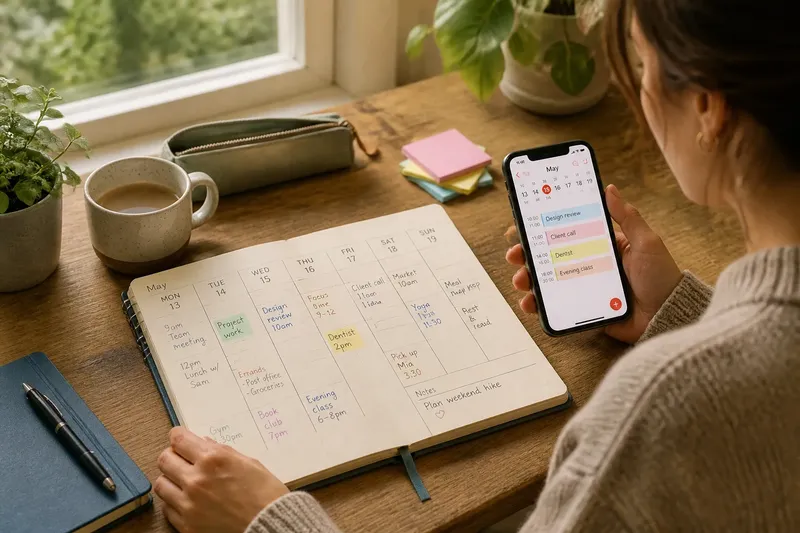
A weekly anchor makes a routine easier to remember by tying it to something that already happens at a dependable point in your week. Rather than assigning the same task to every Tuesday or expecting yourself to follow an identical daily pattern, you connect it to a recurring cue: finishing a regular meeting, coming home from a class, or sitting down for a familiar meal.
The useful question is not simply which day has room. It is which repeatable moment can carry the routine without turning it into another rigid appointment. The right anchor depends on how your commitments behave, how much energy the routine needs, and what you want to happen if the cue shifts.
What makes a weekly anchor useful?
A weekly anchor is a recurring event or transition that reminds you to begin a routine. It might be the end of a weekly shift, the moment you put away laundry, or the first quiet stretch after a regular family visit. The cue belongs to your week; the routine follows it.
This distinction matters. “Do stretches on Wednesday” depends on remembering a day-based instruction. “Stretch after my Wednesday evening class” connects the action to something you are already likely to notice. If the class ends earlier or later than usual, the cue can still work.
A good anchor is easy to recognise, occurs often enough to support the routine, and leaves a plausible opening for it. It need not be the same clock time every week. For a routine that needs quiet, the end of a recurring social commitment may be more useful than a nominal free hour that is often claimed by other things.
Keep the first version modest: one cue, one routine, and a clear idea of what counts as beginning. An anchor is a reminder, not a command to rearrange the entire week.
Which kind of week are you working with?
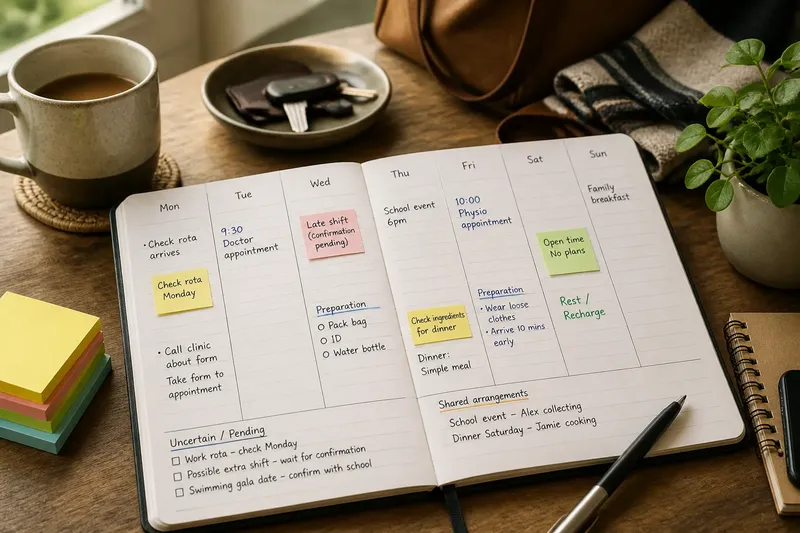
Choose an anchor according to the shape of your commitments. A calendar full of fixed appointments calls for a different cue from a week whose shifts move around; a routine that refreshes you needs different conditions from one that requires focused effort.
If your week has dependable appointments, what fits?
Attach the routine to a recurring appointment’s beginning or end, provided there is a realistic gap around it. For instance, after a regular evening class you might water a particular set of houseplants, because leaving the venue marks a clear transition and the task does not need the same preparation as a deep-work session.
Avoid anchoring the routine to an event that routinely runs late or leaves you drained. A familiar cue is useful only if the action remains reasonable when the ordinary week happens.
If your shifts or caring duties move, what fits?
Use an event that travels with the schedule rather than a fixed weekday: after your first meal at home following work, once a child’s regular activity ends, or after a recurring handover. Such cues can happen on different days while still giving the routine a recognisable home in the week.
If the event itself is unpredictable, choose a broader but still concrete transition, such as the first settled moment after arriving home. “When I get a free moment” is usually too vague; a named transition gives your attention something to catch.
If your week feels crowded, what fits?
Choose a cue already present in the week and attach a small version of the routine to it. If you tend to review household messages after a regular dinner, that moment might hold a brief check of one shared list, rather than a sweeping attempt to organise every commitment.
For a routine that needs more time, a crowded week may not contain a suitable anchor yet. That is useful information: reduce the routine, choose a different recurring event, or wait for a more workable opening instead of treating every missed attempt as a personal failure.
If you need a particular mood or setting, what fits?
Anchor the routine to the conditions it needs. If you write best when the house is quiet, the cue might be the end of a regular household activity; if you want to go for a walk, the useful cue may be returning from a standing errand while daylight remains.
Notice the setting as well as the time. A recurring cue can make the routine easier to start, but it cannot make a noisy room suitable for concentration or turn an inconvenient journey into a restful one.
What if a week changes?
A weekly anchor should bend without disappearing. Holidays, illness, altered shifts, and unexpected obligations can interrupt a familiar pattern; decide in advance whether the routine pauses, moves to a backup cue, or becomes a smaller version.
Imagine you usually sort a handful of personal papers after a weekly class, but the class is cancelled. You could choose the next regular quiet moment at home as a backup and deal with only the papers that need attention now. The observable result is that the routine has somewhere else to land without requiring a full replacement schedule.
Keep the backup simple. A second cue can help when the first one is often disrupted, but several layers of reminders may make the routine harder to remember than the task itself. The point is not to build a contingency plan for every possible week; it is to decide what happens when the ordinary cue is absent.
If the week changes so much that no cue recurs, use a portable trigger tied to an event you can recognise, such as the first calm evening after a demanding stretch. It is less exact than a standing appointment, but more memorable than asking yourself to “find time” without any prompt.
How can you tell whether the anchor fits?
Notice what happens at the cue, not whether you have achieved a perfect streak. A fitting anchor is easy to recall, occurs under conditions that suit the routine, and gives you a clear next action. If you remember the cue but repeatedly have no energy or space for the routine, the problem may be the match rather than your resolve.
Try the arrangement through ordinary changes in the week. If the cue repeatedly collides with meals, travel, or another commitment, move it to a more dependable transition. If the routine feels too large when the cue arrives, define a smaller starting action that still counts as beginning.
It can also help to give the cue a short verbal shape: “After I put my work bag away, I check the library holds.” Name the event and the action plainly. Avoid adding a string of extra tasks; one anchor is easier to recognise than a hidden agenda.
What questions help you choose an anchor?
Can a weekly anchor happen on different days?
Yes. A cue can move with a rotating shift, a recurring class, or a family handover, as long as you can recognise the event and the routine still fits afterwards. The point is a dependable relationship between cue and action, not loyalty to one weekday.
Should the anchor be a time or an event?
An event is often easier to remember when your schedule varies, because you can notice it even if it starts late. A time can suit a stable week, but make sure the routine remains realistic when the day runs differently.
Can one anchor support more than one routine?
It can, but several actions attached to one cue may make the start feel crowded. Begin with one routine; add another only if the cue still feels clear and the combined effort fits the available moment.
What if I miss the cue?
Use the backup you chose, or let the routine wait for its next suitable opening. Avoid doubling the task to compensate unless that is genuinely helpful; the anchor is meant to support return, not create a penalty.
How should you adjust the routine over time?
Revisit the match when your commitments or energy change. A routine that fitted after a weekly class may stop fitting if the class moves, while a household transition may become more dependable as other responsibilities settle. Keep the cue if it still works; change only the part that no longer does.
If the action feels burdensome, make its opening smaller rather than adding more reminders. If it feels too easy to forget because the cue is faint, choose a more visible transition or connect the action to a concrete object, such as placing the notebook beside the mug you use after a regular appointment.
Weekly anchors are most useful when they leave room for an imperfect week. Pick a cue that suits your actual schedule, make the routine small enough to begin there, and keep one backup for predictable disruptions. That gives a routine a dependable place without asking every day to look alike.